
Today, he suggests that electing an “obviously senile” Biden amounts to a coup handing power to “a cabal of unelected powerbrokers” from the Democratic National Committee, and posts cryptic tirades against Joe Biden supporters. Support our independent coverage of the intellectual movements influencing today’s politics by signing up for a free or paid subscription to The Bulwark. Roberts describes the spirit of Wokeness as a “Slave Morality” of binary, black-and-white thinking characterised by vengeance.
Share The Intellectual Dark Web Podcast
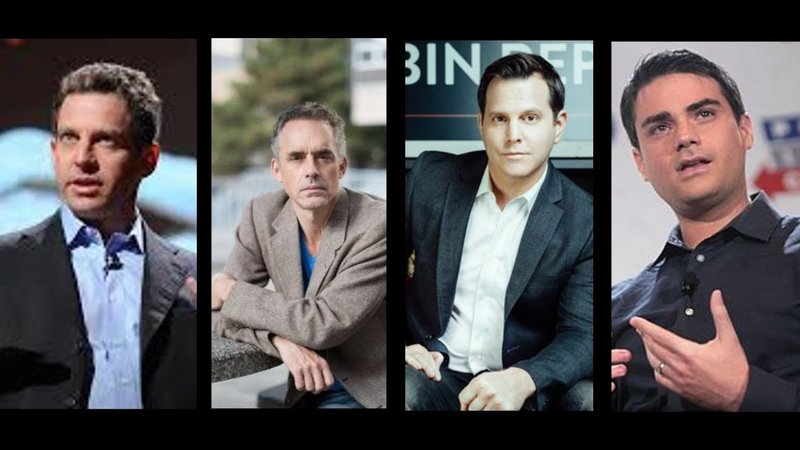
Yet Kisin is right to express a newfound ambivalence about that core print-era value, free debate, for the simple reason that existing evidence suggests the digital revolution is not extending but reversing many aspects of the print paradigm. Taken together, these changes have tended to be narrated in hindsight as self-evidently positive, irreversible progress — what the historian Herbert Butterfield called “Whig history”. This settlement is also, broadly speaking, what IDW advocates gesture at when they use terms such as “classical liberalism” and “Western civilisation”. Today, the radio waves have simply been replaced by YouTube, podcasts, and social media, platforms that can reach much larger audiences than the AM signals of yesteryear. In fact, as Pullmann points out, Rogan, Peterson, Shapiro, and Rubin have a combined reach that competes with Fox News and legacy media such as the Times and the Washington Post.
What Is The ‘Intellectual Dark Web’?
Outside of the progressive academics and activists whose ideology came to dominate the West in the second decade of the twenty-first century, arguably no group influenced public discourse as much as the Intellectual Dark Web. Indeed, as Roberts argues, the Intellectual Dark Web’ s full legacy and historical impact is yet to be determined. The ideas and principles its members championed continue to define not only the ongoing effort to protect universal rights and individual freedoms but also the current and future direction of global policy and politics.
These are indeed mortal sins against the academy, where obtuse language conceals the superstitions of the writer. We employ a five-fold cross-validation procedure to assess the classification model’s discriminative capability. Data is split into five partitions, with four used for training and one for testing.
A $280 EBay Find Or A Priceless Link To JFK? One Man’s 25-year Hunt For The Truth
But instead of updating their ideas to ones that are more workable or responsive to public sentiment, reactionaries simply rebrand their policies every few years in a cycle that is as predictable as fashion designers trying to bring back flared pants. The “Intellectual Dark Web” is a label for a loosely connected group of thinkers and commentators who engage in discussions on controversial topics that are often considered taboo or off-limits in mainstream discourse. They use alternative platforms to promote free speech, challenge ideological conformity, and discuss ideas that might otherwise be suppressed or ignored. “Woke capitalism” is a concept that circulated within the intellectual dark web.
What Happened To The Intellectual Dark Web?
And not all of his allies adopt his analysis of “postmodern neo-Marxism” in full. But in various forms throughout the different public platforms of the “intellectual dark web,” one finds countless repetitions of the notion that leftist college professors armed with dangerous theories from the Old Continent are turning generations of young progressives into enemies of liberal democracy. In some versions of this refrain, the dark web goes further than the neoconservatives of decades past, whose paeans to traditional college curricula often had little implications outside the campus walls. The implication is that zero-tolerance prohibitions in many newsrooms, classrooms or on social media that forbid dissent (or sometimes, even discussion) on these subjects has contributed to some once-reasonable people going down conspiracy theory rabbit holes. The intellectual dark web’s criticism of “woke” politics is centred on this disputed reality (and ideas about power) – spanning issues as diverse as biological sex and gender, debates over police violence and Black Lives Matter, and Diversity, Equity and Inclusion (DEI) policies.
Comments On This Article
It is the recognized life of inner mastery, which allows for a certain agency of repose. There is, decidedly, a lack of this exhibited by those who fall under the moniker of the IDW. Their lucrative, “free reach” populism, set on debasing the truest forms of free speech, and on dictating the parameters of cultural relativism, can only be countered through utmost vigilance, in media and beyond. One cannot claim to be an expert, without also proving their ability to be flexible. A teacher has no reason to teach if they are unwilling to learn from their students.
And if the often glowing portraits of the dark web in publications like The New York Times and The Atlantic are any indication, or Peterson’s appearance at this year’s Aspen Ideas Festival, many liberals seem to agree. But though these figures believe their discovery has led them to form the basis of a new intellectual center in this changing context, recent history suggests their ideas may more likely find a home on the right. The intellectual dark web does not only recycle conservative theories explaining our supposed wave of left-wing irrationalism.
What Is The ‘SCP-067′ Meme? The ’67 Kid’ Horror Trend Of Uncanny ‘Anti-Piracy Screens’ Explained
Twenty-nine years after Laura Ingraham was the Times’s cover model, no one imagines that she is anything but a conventional Republican talking head. Likewise, as my friend Eiynah Mohammed-Smith and I discussed recently on her podcast, nearly everyone profiled by Weiss has dropped the pretense of being anything other than right-wing. Although almost no Americans agree with the eldritch particulars of official Libertarianism, more than a few have affinities for its sentiments, especially those who are young and nonreligious. Secular conservatives have next to no power in the Republican party, but there are quite a few of them in the general population, as surveys from the Pew Research Center have shown over the years.
Apart from those more academic works and translations, Liu was sharing this thoughts online, posting on Douban as Shùjuǎncánpiān 数卷残篇 (“a few tattered volumes”). That’s the “audience capture” phenomenon—a term that, ironically, appears to have been coined by the same Eric Weinstein who christened the IDW concept. Because of this, there is no actual organization, or movement which it represents other than a bunch of “thinkers” sharing similar beliefs while promoting each other. In other words, anyone can say they are a member, and no one has the authority to deny it. Unlike Roger Kimball, Peterson does not make much of an effort to link these academic trends to the radical politics of the 1960s.
Sometimes called “the intellectual dark web,” it lives largely on the internet, but it isn’t a site or a channel, it’s a collection of thinkers (and it’s not the dark web of anonymous cybercrooks you’ve probably heard of). I actually see it not so much as a web but a nest containing rare birds that turn out to be more common than you might think. They use YouTube and podcasts to criticize political correctness and what they call “the regressive left” meaning extremes in left-wing politics. Critics of the Intellectual Dark Web say it just supports right-wing politics and think it encourages extremism about right-wing politics. Sam Harris used to say he was in the Intellectual Dark Web but then said he no longer supported it because it supports Donald Trump. The dark web frequently asserts that what may appear as trivial campus affairs have had a deep and dark influence on American society as a whole.
National Guard Ruling Will Play Into Trump’s Hands
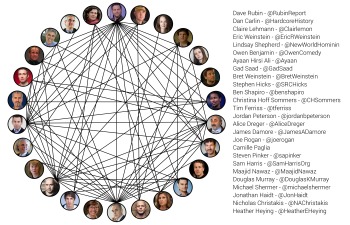
Sidestepping the fact that many of the IDW’s members have appeared on cable TV (as pundits no less), Rubin’s take aligns closely with Weinstein’s. He notes that an IDW member’s analysis on current events will often run counter to mainstream media’s take, particularly left-leaning outlets. Others have argued it is a cover for dated ideas, such asrace-IQ theorizing, that society has already tested and rejected. If the IDW’s ranks expand far enough to encompass conspiracy theorists Mike Cernovich and Alex Jones, then things quickly escalate from dated to dangerous. Meanwhile, others lauded the piece, including cognitive scientist Steven Pinker who described it as an “excellent analysis” (shown below, left) and journalist John Podhoretz who referred to it as “intellectual journalism at its best” (shown below, right).
- Numerous liberals who were not a part of the IDW coterie, such as New York magazine’s Jonathan Chait, the Atlantic’s Anne Applebaum, and Canadian critic Phoebe Maltz Bovy were concerned about the phenomenon at the time.
- As long as the dark web appears unaware of or uninterested in their affinities with these not-too-distant predecessors, we rarely hear explanations of how political correctness actually gains its supposed influence.
- Liberalism, which recognises human nature, is “the middle path” between identity politics on the left and reactionary politics on the right.
- But only one cheer, because he’s still letting some mortifying IDWers off the hook for behavior he’s decried in others, and he hasn’t yet truly reflected on why he was so taken in by dim careerists and a movement built more on emotional opposition to wokeness than a noble pursuit of truth and vigorous debate.
- “It’s Critical Race Theory-speak, this idea of white people circling their wagons.”2 One could also argue that the stars of the IDW were far too eccentric to have been in a culturally dominant position prior to the cultural shift toward identity politics and social-justice progressivism in the 2010s.
“The real Trump derangement syndrome was not to have seen how appalling and dangerous and deranging it was to have a person like this get anywhere near the Oval Office,” Harris added. I interviewed Harris in 2018 for a Daily Beast feature on Rubin, and he was very complimentary of both the man and his show. Fear of offending his right-wing viewer base, Harris said, was why the ostensibly “liberal” Rubin would never criticize Trump for anything, at all. Harris and Szeps both acknowledged their belief that some of this conspiracy theorizing is fueled by failures of crucial institutions.
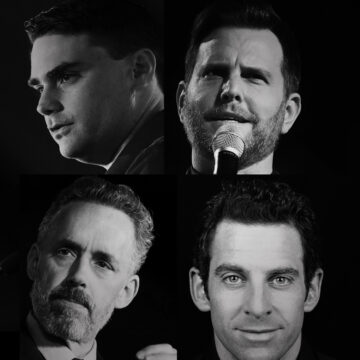
In early May 2018, a New York Times op-ed written by staff editor Bari Weiss titled “Meet the Renegades of the Intellectual Dark Web” drew polarized reactions on social media. If the intellectual dark web were to acknowledge its place within the conservative tradition — or perhaps if the public were to acknowledge it for them — this might have some beneficial effects for American political discourse. Namely, it would allow us to ask them some important questions about what they actually believe is wrong with the United States.