What is more, increasing advanced building technologies and construction methods are likely to further augment the growth of the market in due consideration. However, the growth of this market is difficult as a result of the irregular cost of raw materials and strict environmental rules. The fluctuation in the cost and availability of clay and shale as raw materials is expected to impact the cost of production of bricks.
Table Of Contents For Brick Industry Report
Alternatives in raw material sourcing and energy-efficient production practices are two areas drawing the attention of manufacturers to have minimal impact on the environment. Digital and automation tools allowing innovations in brick design and construction methods are going to revolutionize this sector, improving efficiency and precision in building projects. The standard segment registered significant growth in 2022 due to the growing real estate sector and increasing demand for residential colonies or societies. Standard size bricks are widely used to construct houses and buildings as they allow uniformity and consistency in construction projects.
A Footnote: Brick Lane London Market

This makes the demand for the bricks to always be met in the market to avoid a stagnated profitability of the brick making firms. Clay bricks dominated the brick market with 65% of revenue in 2024, yet fly-ash bricks record a 3.22% CAGR through 2030, widening their presence in regions tightening carbon rules. This shift is anchored in industrial-waste utilization, enabling plants to cut firing temperatures by 20% and align with circular-economy mandates. The brick market size for fly-ash variants is forecast to expand faster than any other type, helped by public procurement criteria that reward recycled content.

Used & Secondhand LEGO Retail Store
Bricks are rectangular building materials typically made of clay, shale, or concrete, which are widely used in construction for centuries. These versatile units serve as the fundamental building blocks for structures ranging from simple walls to elaborate architectural designs. The production process involves molding the raw materials, followed by drying and firing in kilns to achieve durability and strength.
The Bustling East London Market That Has Five Markets Rolled Into One • Brick Lane Market
Anything that you end up with will definitely be a unique and delightful addition to your home and make for particularly special gifts. The market is full of hidden gems and is a haven for collectors or any history buffs on the hunt for something special, and even has a hidden café inside. The Tea Rooms also hosts some retail gems for beauty, wellness, and culture offering a mix of beauty products, jewellery, and prints from around the globe.
Japan Dietary Supplements Market Trends, Share 2033
Equipment upgrades that raise kiln capacity without higher fuel burn ensure contractors receive on-time deliveries during cyclical building surges. The global bricks market is projected to grow from USD 1.79 trillion in 2025 to over USD 2.36 trillion by 2034, registering a CAGR of 3.09%. Key growth drivers include increased construction activity, sustainable building practices, and rising demand in residential, infrastructure, and modular applications across North America and Asia-Pacific. Increasing population propels further urbanization, which supports the need for affordable housing and infrastructure.
Smart Weapons Market Scope, Trends And Growth Drivers 2034
Look no further than this Birmingham market as you’ll find a number of homeware stalls to turn that house or flat of yours into a home. Sargent Vintage Interiors sells upcycled vintage furniture and Sarah Jones Antiques has everything in the world of antiques whether it be a rug or a bit of taxidermy… Plus, there’s Inland House offering vases, trinket trays and wicker furniture. The brick market is valued at USD 1.73 trillion in 2025 and is forecast to reach USD 1.99 trillion by 2030. Heidelberg Materials applies AI to real-time kiln monitoring, claiming 20% cement-use reductions extendable to masonry units.
- Extrusion reduces the weight of the bricks, making them lighter, and assisting in the firing and drying processes, which increases their adoption among brick manufacturers.
- Concrete blocks and bricks crafted from recycled materials or those with reduced carbon footprints have become more famous.
- Alternatives in raw material sourcing and energy-efficient production practices are two areas drawing the attention of manufacturers to have minimal impact on the environment.
- Porotherm clay units deliver superior thermal insulation in Australian pilots, matching structural codes while lowering embodied energy.
- Bricks are used for the reconstruction & repair of infrastructure as they are weather and age-proof and are able to withstand even the harshest conditions, from cyclones and severe marine environments to wildfire-prone areas.
The market is open seven days a week from 11am to 11pm so you can always count on Ely’s Yard for some good grub if you’re in the area. If you’re looking for some bric-a-brac treasure, hunting for a bargain, antique shopping, or in the mood for endless street food options then the bustling Brick Lane Market is the place to be. Technically it’s a number of markets that all stretch the length of Brick Lane that are open both on weekdays and weekends, although Sundays are when the markets really come alive. Once you’ve worked up an appetite and you start to feel peckish, do not fret, you’ll find plenty of treats at London’s top food markets in Brick Lane to wolf down in delight. Now that we’ve taken a look into the different markets Brick Lane has to offer, let’s take a look at what you’ll find in and out of the stalls.
The growing call for in the residential and infrastructure sectors is a key driving force of increase within the concrete block and brick market. In residential production, the surge is fueled by way of urbanization and the need for less costly housing, especially in emerging economies like India and China. Government projects assisting housing infrastructure and growing consumer desire for single-own family houses in addition propel this demand.
The Indian authorities’ projects inclusive of “”Housing for All”” and smart metropolis initiatives significantly boost call for long lasting and cost-effective production substances like concrete blocks and bricks. Additionally, the area’s relatively low labor prices and ample availability of uncooked substances guide the production and affordability of those building materials. In contrast, Western markets face higher fees and stringent environmental guidelines that restrict the usage of conventional concrete blocks and bricks.
This includes fly ash clay bricks, made from industrial waste products like fly ash, which not only reuses waste but also imparts superb strength and integrity to the structure. In effect, these bricks easily become favored in sustainable construction methods, hence serving to achieve the global goal of low ecological footprint. Other brick innovations include interlocking designs for more rapid assembly and lighter types for seismic regions attributed to improving overall structural performance. In the dynamic flow of global construction materials, bricks emerge at the core because of their durability, versatility, and sustainability. Bricks form a greatly diversified market globally, with different types meeting special construction needs. Clay bricks, sand lime bricks, fly-ash clay bricks, and many such specialized variants fulfill various conditions of the environment and architectural needs.
Key Global Brick Industry Players
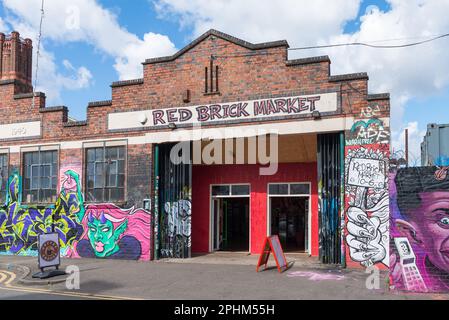
The independent indoor market is seeing more and more small businesses taking residence at the site, including clothes companies such as Cow, Dark Bull Vintage and Rift Retro. For all your accessory needs there’s Selected Steeze offering hand-picked vintage pieces and On The Sunshine selling snazzy handmade jewellery. Red Brick Market acts as a department store alternative retail site where stallholders needn’t have to be present at their stall. With a central payment desk and staff employed by Red Brick Market on the floor, stallholders are able to come and go as they please and shoppers just pay on their way out whether they are there or not.
Based on application, the market is segmented into residential building, commercial building, infrastructure, path, parterre, and landscaping. The market within the residential building segment is characterized by its adaptability and the diverse applications of bricks, from enhancing exterior facades to creating appealing interior spaces and functional outdoor landscapes. These versatile building materials continue to be integral to the construction and design of residential properties. The COVID-19 pandemic has considerably impacted the market, as it did on many industries worldwide.
Their strong global presence and brand recognition have contributed to increased consumer trust and loyalty, driving product adoption. Moreover, these industry giants continually invest in research and development, introducing innovative designs, materials, and smart features in cloth wardrobes, catering to evolving consumer needs and preferences. The collective efforts of these major players significantly impact the competitive landscape and future trajectory of the Concrete Block and Brick Market growth. 1793 was a major year for the Brick Market as the upper floors of the building were leased to Joseph Harper and Alexander Placide for the construction of a theater.
A prevailing trend in this segment involves the increasing preference for durable and cost-effective materials, positioning bricks as a fundamental choice for infrastructure development. The robust nature of bricks makes them well-suited for heavy-duty applications, contributing to the resilience and longevity of infrastructure projects globally. This trend is particularly notable as governments invest in extensive infrastructure initiatives to support economic growth and urban development. The global bricks market was valued at USD 1,642.15 billion in 2022 and is expected to grow at a CAGR of 3.1% from 2023 to 2030.